
Our Approach
Efficiency and Innovation
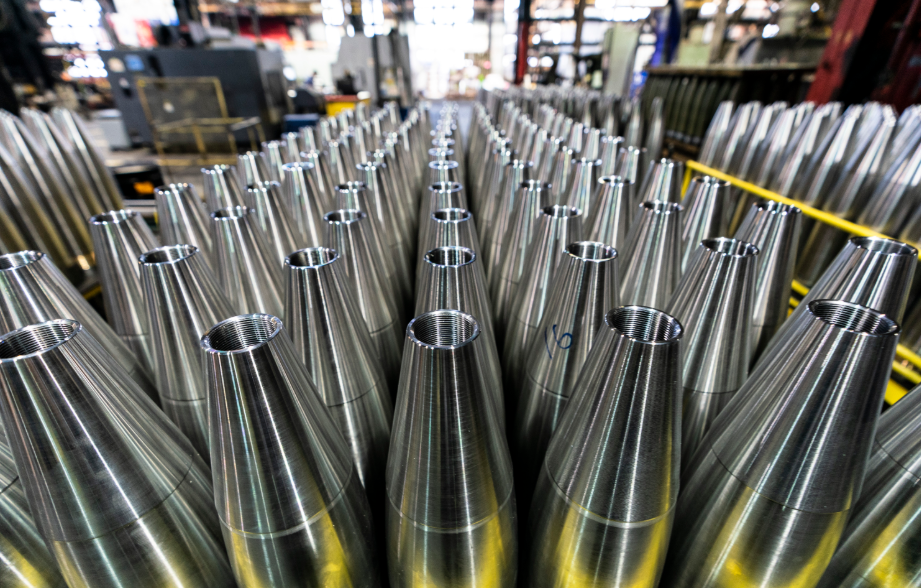
A key characteristic of our manufacturing approach is that we aren't reliant on specialist, long-lead capital equipment and this enables us to respond rapidly to surge demand and also enables replication of our approach in allied countries where appropriate. We are focused on maintaining strict adherence to the JBMOU and the various Stanags that govern ammunition production whilst simultaneously innovating novel solutions that eliminate costs.
Our approach is to embrace the technical challenges that others eschew because, in reality, we can’t remain detached or immune from risk through the use of complex subcontracts or out sourcing and layers of subcontracts simply isolate us from problems and leave us unable to control production. As the manufacturer we will vertically integrate; by bring all specialist skills in house we will enable our design teams to learn iteratively from the manufacturing process and build layers of competence and deep product knowledge. We also we avoid failures in the supply chain which both enhances our competitive edge and secures sovereign capability that assemblers of imported sub assemblies simply can’t guarantee, especially in times of war.
In his seminal book, ‘The Innovators Dilemma’, M. Christensen described how incumbents often recognised new technologies and products were both available and better than their current offering but resisted adopting them to protect their legacy investments and their associated cash-flows only to be wiped out by competitors who were not similarly encumbered.
The Coventry Arsenal has no legacy investments to protect and so we’re free to adopt new methods and technologies that benefit our customers using our 5-part algorithm
1. Make Requirements Less Dumb: Question every constraint or requirement, especially if it came from a "smart person" or department. Requirements should be traced to a specific person, not a department.
2. Delete Part or Process Steps: Remove unnecessary components or processes. If you are not adding them back in at least 10% of the time, you are not deleting enough.
3. Simplify and Optimise: Streamline the remaining steps. This should only occur after steps 1 and 2, to avoid optimising a process that should not exist.
4. Accelerate Cycle Time: Speed up the remaining, necessary, and optimised processes.
5. Automate: Automate the final, refined process. Oftentimes automation simply accelerates & simplifies tasks that should’ve been deleted.