Coventry Ordnance Works
The Arsenal of Democracy
The Coventry Ordnance Works Limited was established in July 1905 by a consortium of leading British shipbuilding firms — John Brown (50%), Cammell Laird (25%), and Fairfield (25%) — with the encouragement of the British government. The objective was clear: to introduce a third major arms consortium capable of competing with the dominant duopoly of Vickers, Sons & Maxim and Sir W.G. Armstrong Whitworth & Co., thereby driving competition and lowering procurement costs.
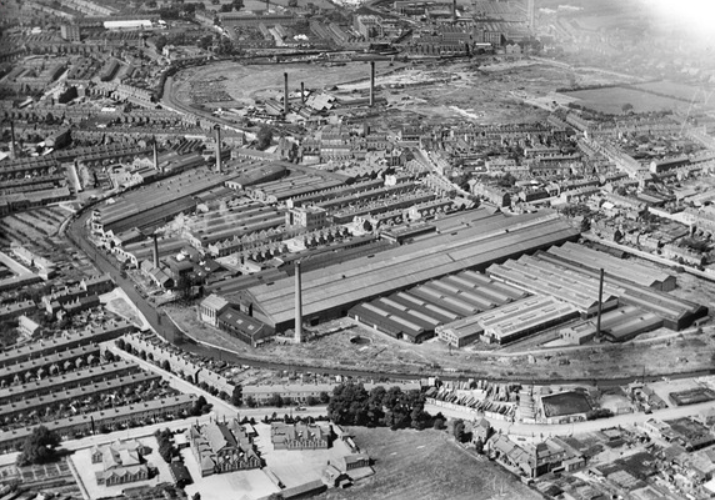
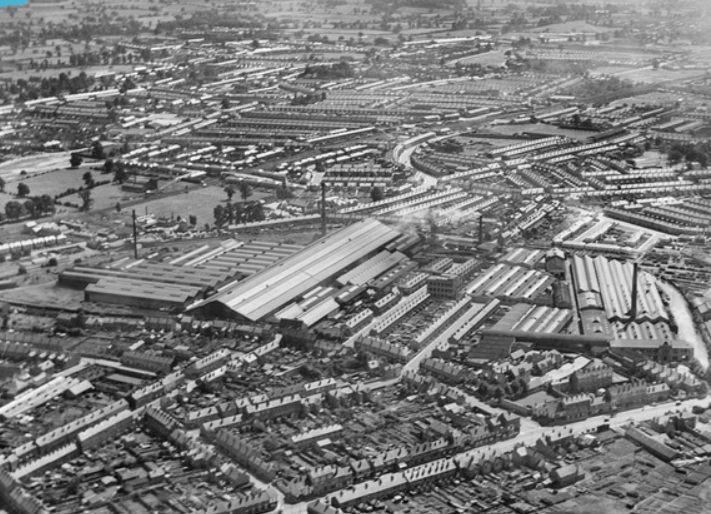
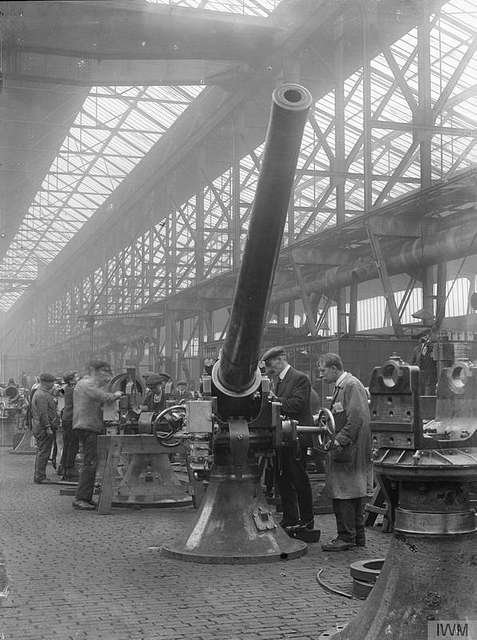
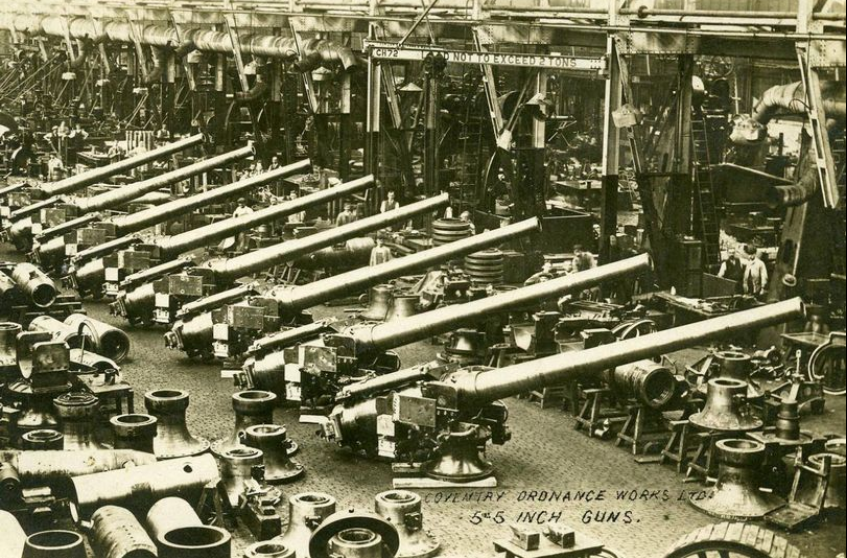
The company acquired a 60-acre site on Stoney Stanton Road in Coventry from Cammell Laird and rapidly developed it into a major industrial complex. Early production focused on smaller naval guns and mountings, alongside field guns, gun carriages, ammunition, and associated military equipment. Expansion followed swiftly; by 1906, work had begun on manufacturing large-calibre guns and turrets for Admiralty battleships and cruisers, establishing Coventry as a centre of heavy armaments production.
Innovation in our DNA
From its inception, innovation formed a defining characteristic of the Coventry Ordnance Works. In 1906, the company established its own proving ground at Boston in Lincolnshire, featuring a 22,000-yard testing range — a significant facility that allowed the company to validate performance independently.
Beyond naval ordnance, principal products included the 4.5-inch Howitzer and the formidable 15-inch Siege Howitzer, which entered production in 1910 and 1913 respectively. Another notable development was the 37 mm gun introduced in 1917 — recognised as the first modern automatic cannon.
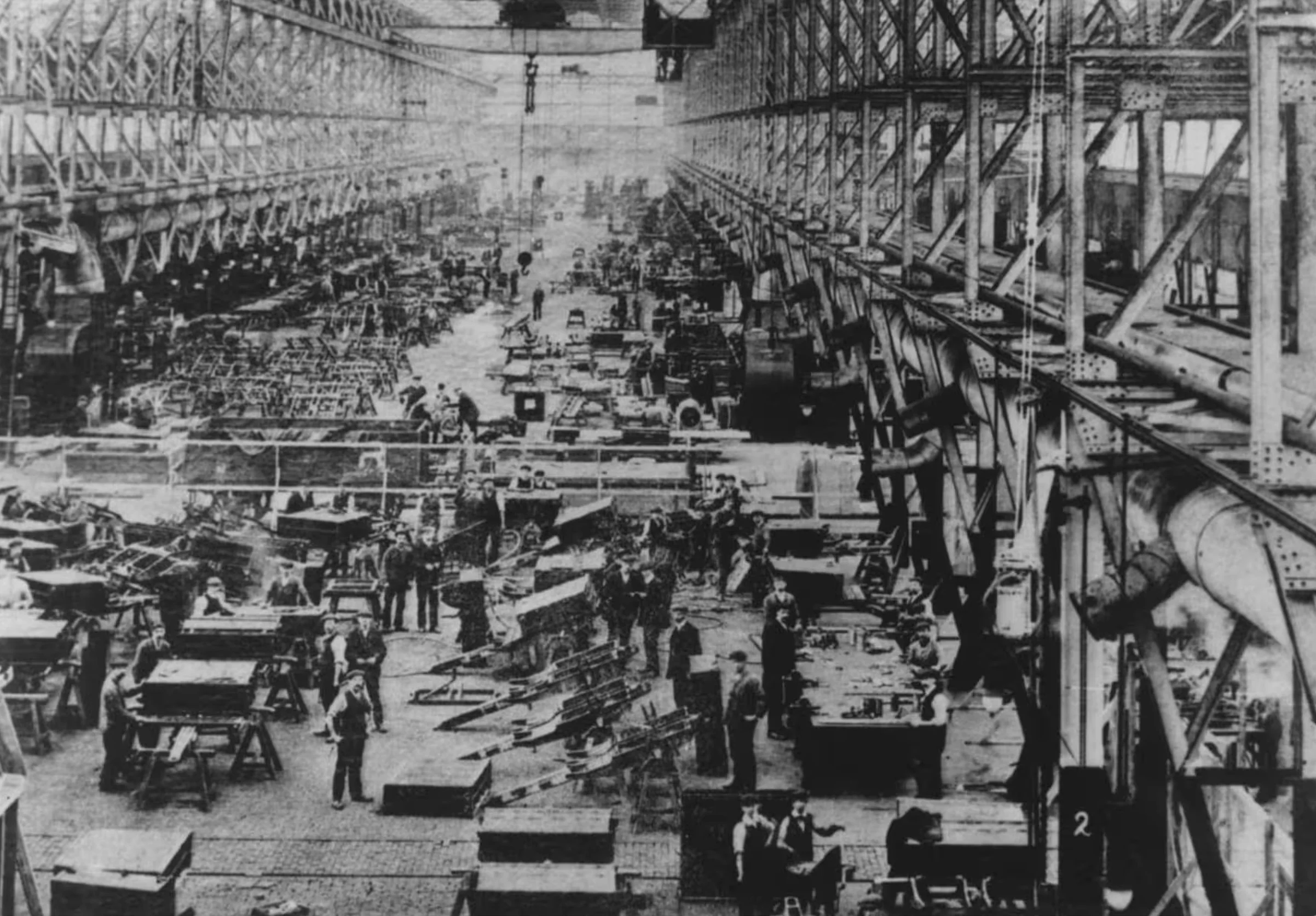
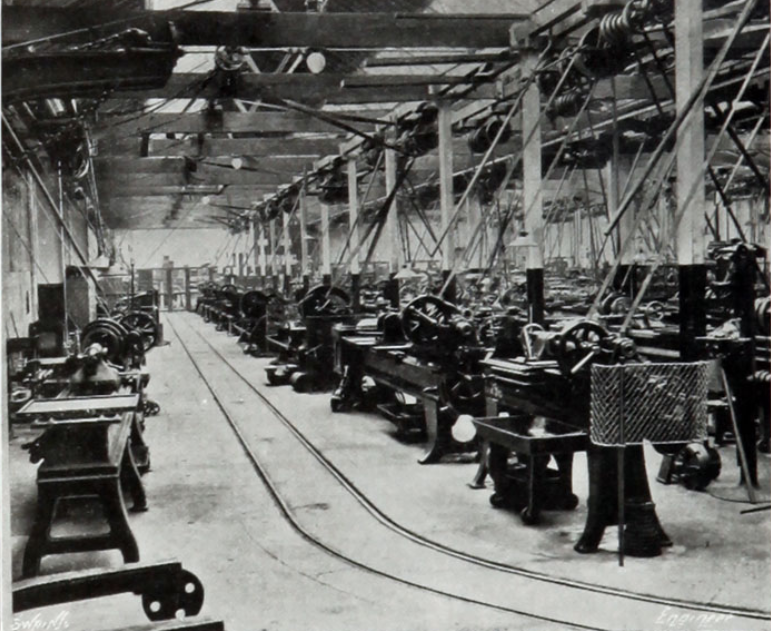
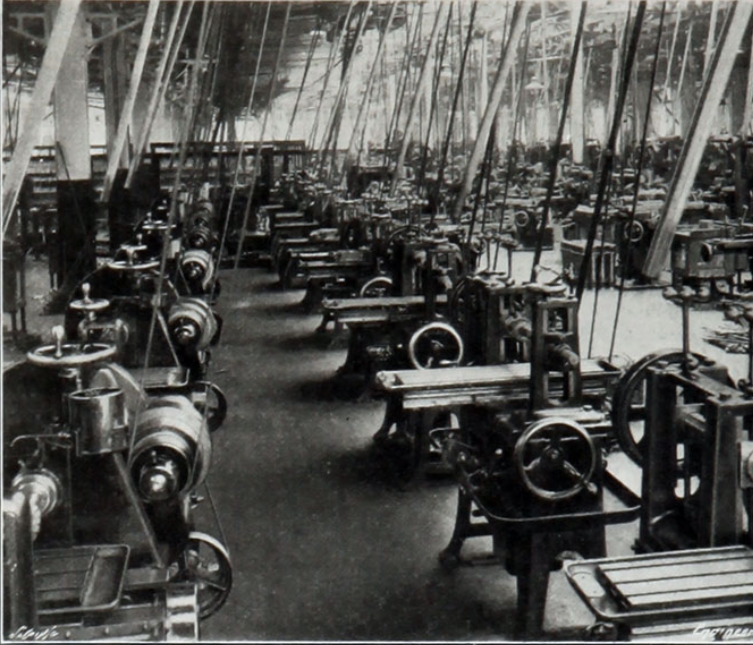
Engineering innovation extended to manufacturing processes. The company pioneered a system in which up to twenty portable machines could be applied to a single large fabrication, rather than transporting heavy workpieces between fixed stations. This approach improved efficiency, reduced handling risks, and anticipated later developments in flexible manufacturing.
The Great War (1914–1918)
The outbreak of the First World War created unprecedented demand, propelling Coventry Ordnance Works into a period of intense expansion. Labour shortages emerged as many skilled workers enlisted; these gaps were addressed through the large-scale recruitment of women into industrial roles. At peak wartime output, the Coventry works employed approximately 9,500 personnel, including around 3,000 women — reflecting broader shifts across British industry.
Managing Director Rear Admiral Reginald Bacon appealed directly to employees to remain in essential industrial roles, and workers were issued “On War Service” badges to signify their contribution to the war effort and shield them from social pressure to enlist. Such measures underscored the critical role of domestic industry in sustaining military operations.
Coventry itself became synonymous with munitions production. Contemporary observers described its factories as “industrial beehives,” and it was later remarked that no other city was so completely absorbed in the manufacture of war materiel.
The scale and versatility of the Coventry Ordnance Works allowed rapid diversification across contracts. The expansive site contained numerous specialised workshops producing gauges, tools, artillery components, wheels, and heavy naval guns. Production ran continuously in shifts, ensuring round-the-clock output.
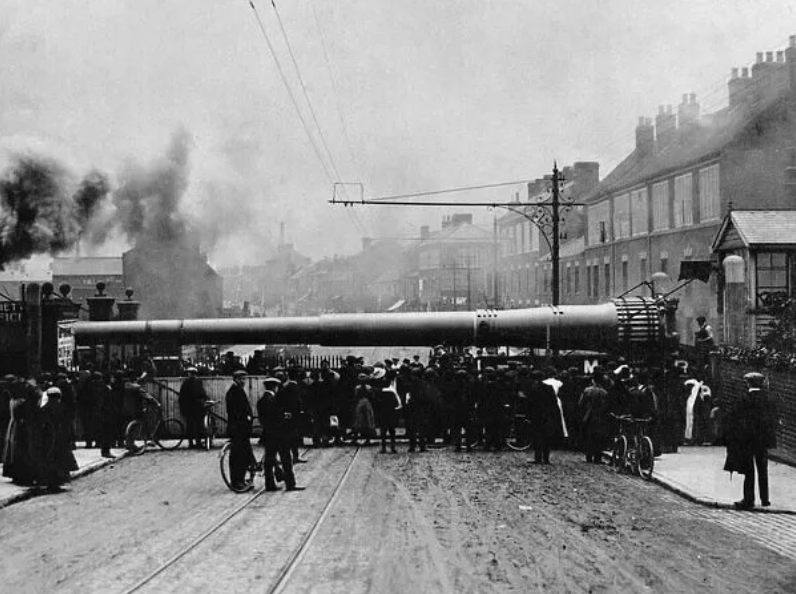
Completed heavy guns were transported directly from the factory via rail lines crossing Stoney Stanton Road. Their size was such that they spanned the width of the roadway, drawing local crowds who gathered to witness the dispatch of weapons destined for the front — a visible symbol of Coventry’s contribution to the national war effort.